

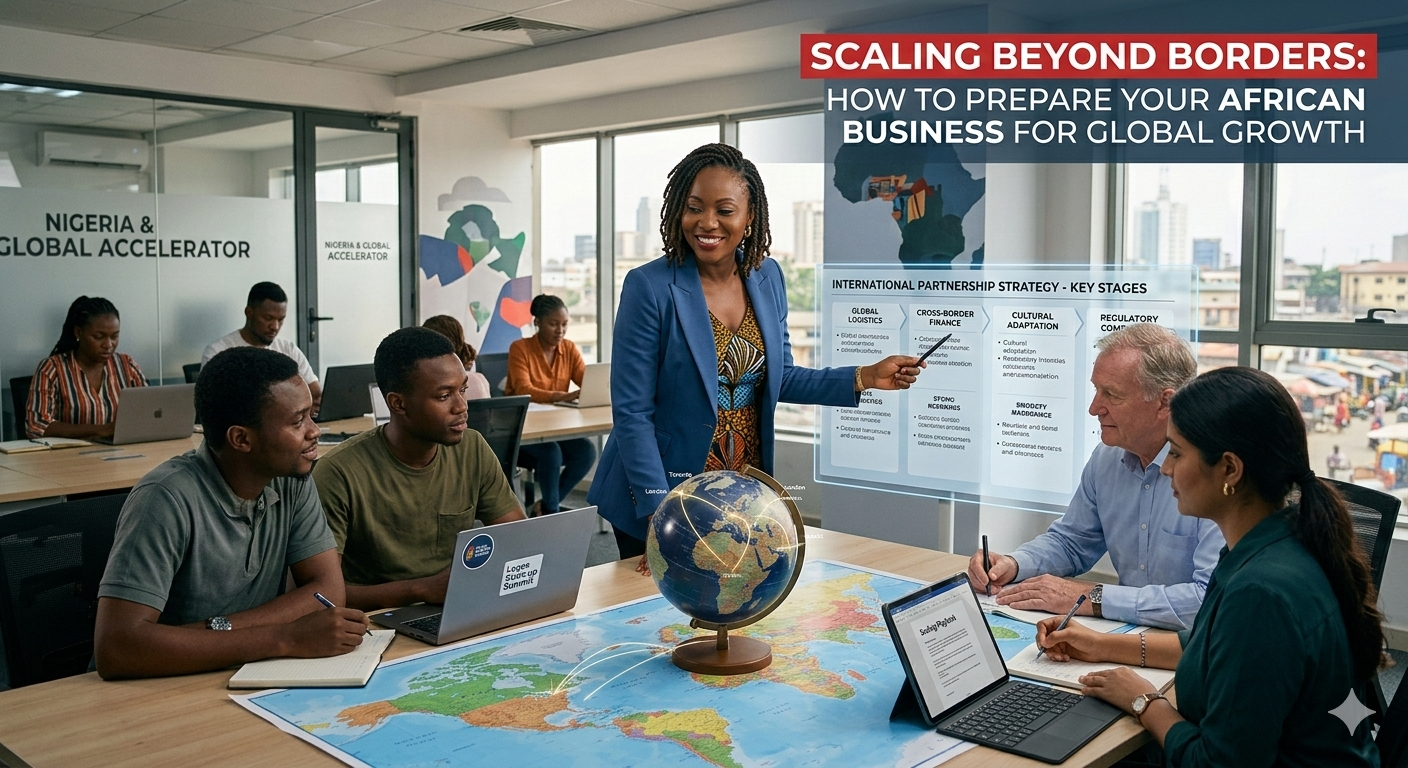
Your Business Is Bigger Than Borders
If you’re building something remarkable in Africa, here’s some truth: the world is watching and it’s waiting.
Gone are the days when African businesses only thrived locally. Today, the opportunity to scale globally isn’t just for tech giants or international corporations. It’s for the ambitious entrepreneur in Lagos, the founder in Nairobi, the disruptor in Kigali.
Whether you want to tap into bigger markets, attract international funding, or build a brand that echoes across continents, going global is no longer a dream, it’s a strategy.
This guide will walk you through the key steps to position your business for international expansion. Because growth is great but global growth? That’s the next level.
Why Global Expansion Isn’t Just a Buzzword
Going global does more than just open new doors. It strengthens your entire foundation.
Here’s why more African businesses are expanding across borders:
- Larger Markets
You move from a few million customers to potentially billions. It’s a chance to scale impact and income at once. - Diversified Revenue
You’re no longer dependent on one economy. That kind of diversification builds resilience. - Access to Funding
Investors love businesses with global potential. A cross-border footprint builds serious credibility. - Innovation and Growth
New markets bring fresh ideas, new tech, and lessons you can’t learn standing still. - Brand Power
The moment your brand operates internationally, its perceived value multiplies at home and abroad.
✦ Keyword integration: African business expansion, global growth strategies, international business Africa, scaling African businesses, diversify revenue
Step 1: Start With Market Research That Goes Deep (Not Just Wide)
Before you cross any border, do your homework and then do it again.
- Where Should You Go?
Look for countries where your product or service already has demand. What’s their economic climate like? Do they align culturally? What’s their buying power? - Who Are You Competing With?
Study your potential competitors. What are they doing right? Where are the gaps you can fill? - How Will You Enter?
Choose your entry model based on your goals and resources:
- Exporting great if you’re just testing the waters.
- Licensing or Franchising for expanding your model without too much overhead.
- Joint Ventures are good when you need a local partner.
- Direct Investment if you’re ready to go all in with offices or branches.
- Exporting great if you’re just testing the waters.
- Don’t Skip Culture
What works in Ghana may not work in Germany. Understand local etiquette, business practices, and preferences. Cultural intelligence can be the difference between a flop and a footprint.
Keyword integration: International market research, global market entry strategies, competitive analysis international, African business global expansion, cultural adaptation business
Step 2: Get Legally and Financially Set Up to Win
You’ve got the vision. Now let’s make sure the foundation is strong enough to hold it.
- Understand Local Laws
Every country has its own rules about trade, IP, contracts, and business setup. Work with legal professionals early not just when things go wrong. - Know the Tax Rules
From double taxation treaties to local tax systems, be crystal clear on what you’ll owe and where. Smart tax planning protects your profits. - Plan Your Finances
International growth requires capital. Will you self-fund, raise investment, or go after global grants? Budget for setup costs, staff, legal fees and surprise expenses. - Manage Currency Risks
Exchange rates can work for you or against you. Develop a currency management strategy that keeps you financially stable. - Make It Easy to Pay You
Whether you’re B2B or B2C, set up international payment systems that are secure, fast, and simple. Make it easy for global customers to say yes.
Keyword integration: International trade laws, global business taxation, financing international expansion, legal compliance global business, currency risk management
Step 3: Adapt Your Business from the Inside Out
Scaling globally means transforming how your business operates from logistics to team dynamics.
- Rethink Your Supply Chain
You’ll likely need new partners, warehouses, shipping methods, and customs strategies. Plan early so operations don’t break when demand grows. - Build the Right Team
Will you hire locally or send team members abroad? Understand local labor laws and culture to avoid hiring headaches. And don’t underestimate the power of a multicultural team. - Upgrade Your Tech Stack
International operations need strong systems: CRM, cloud storage, e-commerce, data security, and customer service tools that scale. - Localize Like a Pro
Your product, service, or app might need tweaks. Language, packaging, compliance — even colors and messaging. Be respectful, adaptable, and intentional. - Market Like You Belong
Your brand might need to shift tone, voice, or platform depending on where you’re landing. Do your audience research and market like a local, not a visitor.
Keyword integration: International supply chain, global HR strategies, product localization, international marketing, scaling operations globally
Final Word: It’s Time to Dream Global and Build for It
As an African entrepreneur, you’re already building with grit, resilience, and creativity. Now imagine applying that same brilliance to markets across the world.
Yes, it takes work. Yes, it takes structure. But it also takes boldness and you’ve already proven you have that.
So start where you are, dream bigger than borders, and build with clarity.
The world is waiting.
Ready to explore your options and build your path to Canada the smart way?
Book a free 1-on-1 consultation with Cole.
Get personalized guidance, a clear step-by-step strategy, and expert support every step of the way.
Click here to book your session and take the first step.
Your new life in Canada isn’t just possible. It starts with the right move.